Once you've appointed a builder and construction starts, it's tempting to think you've reached the point where somebody else takes over. In my experience, that's when the developer needs to become more involved, not less.
A good builder is hugely important, but appointing one doesn't mean you can simply hand over the drawings and wait for the finished development. There are too many moving parts. The builder, architect, engineers, consultants and suppliers all have their part to play. Programme, cost, design and quality are interconnected, and a delay or decision in one area can quickly affect another.
Don't manage a development once a month. Manage it continuously.
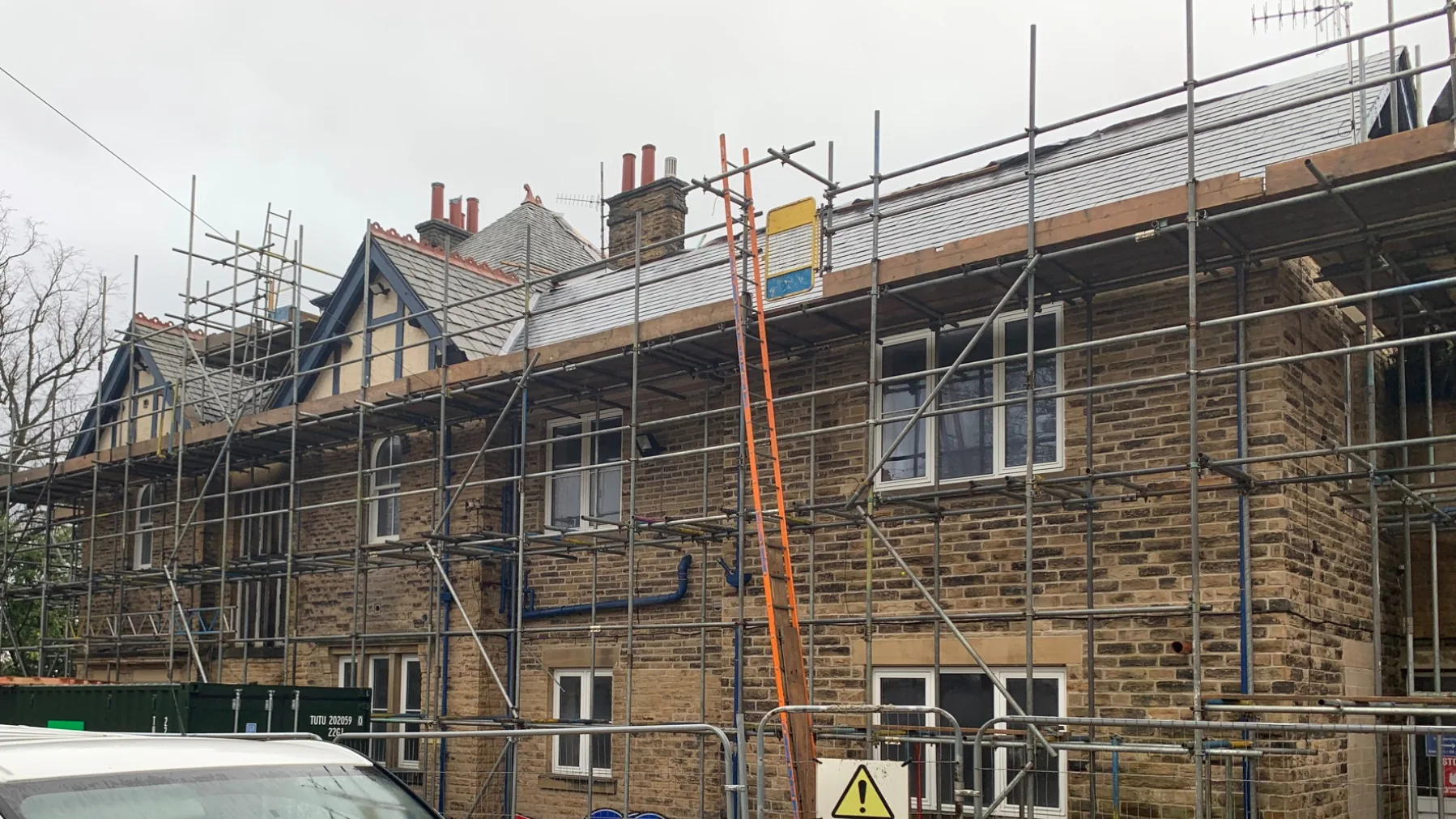
Choosing the builder is only the beginning
Naturally, I want a builder with the experience and resources to deliver the type of development I'm undertaking. Price matters, but it isn't the only consideration.
I want to know what they've built before, look at the quality of their work and understand exactly what's included in their price. A quotation that appears cheaper isn't necessarily cheaper if important items have been excluded or assumptions have been made that later become extras.
But however carefully you select your builder, once they're appointed the developer still has an important job to do. You can't simply hand them the project and assume everything will take care of itself.
Don’t wait for the monthly valuation
One mistake I see developers making is relying too heavily on the monthly valuation to tell them how their project is progressing. The valuation has an important purpose. It establishes the value of work carried out and helps determine what should be paid.
But a monthly valuation isn't project management. By the time it arrives, several weeks of construction have already passed.
I want to know what's happening while it's happening. Are we where we should be against the programme? Are the right trades on site? Are materials arriving when they're required? Is information reaching the builder when they need it? Are decisions outstanding? Are variations accumulating? Is the quality right?
And perhaps most importantly: Is what I'm seeing on site consistent with what the programme says should be happening?
A development can look incredibly busy and have plenty of money being spent while still falling behind.
Keep going back to the programme
Before construction starts, I want a realistic programme. Then I want to use it.
There's little point producing an impressive construction programme at the beginning of a project, putting it in a folder and looking at it again three months later. Continually compare what's actually happening with what was supposed to be happening.
If something should be complete and it isn't, I want to understand why. Then I want to know what effect that has on everything that follows.
If you fall behind early in a development, don't assume you'll catch the time up later.
You'll often hear that the time can be recovered. Sometimes it can. But I certainly wouldn't base my development programme or financial assumptions on the hope that it will be.
If an activity finishes two weeks late, the next trade may not simply arrive two weeks later. They may now be committed to another job. Deliveries might need rearranging. Inspections may move. Other trades may be affected. A two-week delay doesn't necessarily remain a two-week delay.
Look forwards, not just backwards
Good development management isn't simply recording what happened last week. You need to know what's supposed to happen next.
If a trade is due on site in three weeks, what needs to happen before they can start? Are the drawings ready? Have the materials been ordered? Are there long lead-time items? Does the builder need a decision? Is information required from the architect or engineer? Is an approval or inspection needed?
A programme is much more useful when you use it to anticipate problems rather than simply record delays after they've happened.
Knowing you're three weeks behind is useful. Knowing three weeks earlier that you're about to become three weeks behind is considerably more useful.
Get the whole team to buy into the programme
This is something I think is extremely important. The construction programme isn't just the builder's responsibility.
The architect, structural engineer, other consultants, suppliers and the developer all have responsibilities that can affect it. I want the whole team to understand the programme and, importantly, understand where their work sits within it.
Take the architect as an example. If the builder needs a drawing or construction detail by a particular date, the architect needs to know that well beforehand. There's little point discovering on Monday that a drawing is required by Friday if the architect already has two weeks of work ahead of them.
The architect needs to understand their responsibility not to become the bottleneck. The same applies to the structural engineer and other members of the professional team.
If information isn't available when it's required, the builder may not be able to proceed. A trade may have to move somewhere else, or worse, leave the site and return later. That can have consequences far beyond the original missing drawing.
Don’t just send everyone the programme — get them to commit to it
Sending the professional team a copy of the programme isn't enough. I want them to look at it.
Are the dates realistic? Can the architect provide the information by the dates shown? Can the structural engineer deliver their details? Are approvals required? Are there decisions that I need to make as developer? Does somebody need information from somebody else before they can do their part?
If there's a problem with a date, I want to know about it early. I'd much rather an architect tell me four weeks beforehand that a deadline is going to be difficult than discover four days beforehand that the information isn't going to arrive.
A programme only works if the people responsible for delivering it understand what's expected of them and when.
The builder isn’t always responsible for a delay
It's very easy to walk onto a site, see that something hasn't happened and immediately blame the builder. But good project management means understanding why it hasn't happened.
Is there a labour problem? Are we waiting for materials? Is there a design issue? Has the structural engineer not provided a detail? Is the architect still working on information? Is an approval outstanding? Or is the builder waiting for me to make a decision?
You can't fairly hold a builder responsible for failing to construct something when your professional team hasn't provided the information they need to construct it. Equally, if the information has been provided and the builder isn't progressing as they should, I want to know that too.
The point isn't about allocating blame. It's about identifying what's actually holding the project up and dealing with it.
Stay on top of design changes
Changes happen during developments. On conversions in particular, you can open something up and discover that the building isn't quite what everybody expected.
Sometimes a change is unavoidable. Sometimes you find a better solution. Sometimes you decide that spending additional money will improve the finished development. There's nothing necessarily wrong with making changes.
The important thing is understanding their consequences before you agree to them.
Whenever a significant change is proposed, I want answers to three questions: What exactly are we changing? What is it going to cost? What does it do to the programme?
A £5,000 variation might cost considerably more than £5,000
Suppose a proposed design improvement results in a £5,000 builder's variation. It might be money well spent. Perhaps it substantially improves the finished property or increases its value.
But what if it also adds three weeks to the programme? Now you potentially have three additional weeks of development finance and site costs. What happens to the trades that were supposed to follow? Have materials already been ordered? Do drawings need revising? Does the architect or structural engineer need to become involved? Are there implications for planning, Building Regulations, the warranty provider, fire strategy or acoustics? Could it affect when purchasers can complete?
The true cost of a design change isn't necessarily the figure written on the builder's variation. You need to understand the knock-on effect.
But don’t become the developer who changes everything
There's another side to this. You need to keep your builder on side.
A development can last many months and there will inevitably be difficult conversations along the way. Having a good working relationship with the builder is extremely important.
One of the quickest ways to damage that relationship is to continually change your mind. A developer can easily think, “It's only a small change.” But to the builder it might mean materials already ordered, work already completed, subcontractors booked and a sequence of work that now has to be altered.
Do that repeatedly and you aren't just frustrating the builder. You're potentially creating your own cost and programme problems.
If you've instructed twenty changes and the project subsequently falls behind, establishing the cause becomes considerably more difficult. Is the builder late? Did your changes cause the delay? Was professional information late? Was there an unforeseen problem? Usually the reality isn't as simple as we'd like it to be.
So I try to make considered decisions. Don't change things simply because you can.
Keep the builder on side — but make sure they know you’re on top of the job
There's a balance to be struck. I don't believe in constantly interfering with a builder or telling experienced tradespeople how to do their jobs.
But equally, the builder needs to know that I'm on top of the development.
If I'm told something will take another three weeks, I want to understand why. If there's an additional cost, I want to know what it's for. If we're falling behind programme, I want to understand what's causing it and what's being done about it. If somebody suggests changing the design, I want to know the implications before agreeing.
That doesn't mean pretending you know more about construction than the builder. It means knowing enough to ask the right questions and understanding whether the answers you're receiving make sense.
Don’t let the site redesign the development for you
On a busy construction site, small decisions can easily start being made informally: “It would be easier if we moved this.” “Can we do it this way instead?” “The drawing doesn't quite work here, so we'll change it.”
Some suggestions may be perfectly sensible. In fact, an experienced builder can often identify a practical solution that's better than what was originally drawn. But the relevant people need to know about it.
A change that looks insignificant to one trade could affect another trade that hasn't even arrived on site yet. It could also have implications for the architect's design, structural calculations, planning permission, Building Regulations, warranty requirements, fire strategy or acoustic performance.
A five-minute decision on site can have a five-week consequence later in the programme.
You need to understand what you’re being told
This is where experience makes an enormous difference. Over time, you become familiar with how developments work, the language used on site and the sorts of problems that genuinely arise.
You start to recognise when something really is complicated. And you become better at recognising when something perhaps isn't quite as complicated as you're being led to believe.
If a builder tells me something needs changing, costs another £8,000 and adds three weeks to the programme, that doesn't automatically mean they're wrong. There may be a perfectly legitimate reason. But I want to understand it.
Why is the work required? What's changed? How has the additional cost been calculated? Why will it take three weeks? What alternatives have been considered? What happens if we don't do it?
You don't need to know more about construction than your builder. But you need to know enough about your development to manage the builder effectively.
This is where experience can help
It's also an area where I think one-to-one mentoring can be particularly valuable.
Someone I'm mentoring might call me and say: “My builder says this needs changing, it's another £8,000 and it's going to delay us by three weeks. What do you think?”
We can talk through it. What questions would I ask? Does the explanation make sense? What information should they request? Does the proposed cost need checking? Should the architect, engineer or another member of the professional team be involved before a decision is made?
I won't pretend to have every technical answer. That's why we employ architects, engineers, quantity surveyors and other specialists. But after nearly 40 years working in property, I've had a lot of those conversations.
Sometimes what a developer needs is someone experienced enough to cut through the noise, get to the real issue and help them ask the right questions.
That's very different from simply telling somebody what to do. It's helping them understand what's happening so they can make an informed decision about their own development.
Cost control happens throughout the project
The same principle applies to the budget. Don't wait until the development is nearly finished to add up the variations and discover what the project has actually cost.
I want to know throughout construction what we've committed to, what we've spent, what variations have been agreed, what potential additional costs are coming and how much contingency remains. And I want to know whether the expected end value has changed.
Your development appraisal shouldn't disappear once you've bought the site. Keep returning to it. The appraisal you prepared before acquisition was based on the information you had at the time. As construction progresses, you'll have better information. Use it.
Manage quality while you can still do something about it
Cost and programme matter, but neither should make you lose sight of quality. Again, I want to identify problems while the work is being carried out.
The acoustic work I've discussed in another article is a good example. I don't want to wait until finished apartments undergo acoustic testing to discover whether the construction has been executed correctly. I want the specification understood by the builder, the work checked as it progresses and important elements photographed before they're covered up.
Inspect what you're building while you still have the opportunity to change it relatively easily. Finding a problem while the relevant trade is still on site is very different from finding it once an apartment is decorated and you're trying to complete a sale.
When the building bears its teeth
Every development can look relatively straightforward when you're looking at drawings and a spreadsheet. Then construction starts. That's often when the building bears its teeth.
Something unexpected appears. A design needs changing. A cost increases. A delivery is delayed. A trade doesn't arrive. The existing building isn't quite what everybody thought it was.
That's property development. The important thing isn't believing you'll somehow undertake a development where nothing goes wrong. It's how quickly you know about a problem and how you deal with it.
An issue identified today might be relatively straightforward to resolve. The same issue left for four weeks may have affected the programme, several trades and the budget.
Don’t manage a development once a month
I don't believe you can effectively manage a property development by visiting occasionally and reading the monthly valuation.
I want to know what's happening throughout the project. I keep going back to the programme. I monitor costs and variations. I want to know about proposed design changes before they're implemented. I look ahead to the information, materials and decisions we're going to need.
I make sure the architect, engineers and other members of the professional team understand their responsibilities to the programme and the dates they need to meet. I keep talking to the builder and professional team. And I try to maintain a good relationship with the builder while making it very clear that I'm on top of what's happening.
That doesn't prevent problems. Property development doesn't work like that. But it gives you a much better opportunity to deal with those problems while they're still manageable.
For me, that's one of the biggest differences between simply paying for a development and actually managing one.
Don't manage a property development once a month. Manage it continuously.
Because ultimately programme, cost, design and quality aren't separate issues. They're all connected.
Managing a live development?
If you’re dealing with a builder, programme delays, variations, design changes or professional-team information, we can work through the actual situation and the questions you need to ask before making a decision.
Arrange a Free 30-Minute Call