You've found a development opportunity, carried out an initial assessment and the numbers look promising. Before committing to a full planning application — or to the acquisition itself — a planning pre-application can help you understand how the local planning authority may view the proposal.
I've used the pre-application process on development projects and think it can be extremely valuable. But it's important to understand what it is, where it fits in the acquisition process, and what it isn't.
What is a planning pre-application?
A pre-app is an opportunity to approach the local planning authority before submitting a full planning application and obtain its initial view on a proposed development.
Depending on the project, information might include the site and existing use, drawings, proposed use and number of units, access and parking, scale and massing, photographs, planning history, design information and relevant constraints. Larger or more complicated schemes may need considerably more.
The purpose isn't simply to ask “Can I get planning permission?” It is to identify planning issues early enough for the answers to influence your decisions.
When would I consider a pre-app?
For me, a pre-app would normally come after I've carried out my initial assessment of the development opportunity and reached an agreement in principle with the vendor to purchase the site.
Before spending meaningful money on architects, drawings, planning advice and the pre-application process, I want to know there is a realistic prospect of acquiring the property at a price that works.
There's little point investing significant time and money developing a planning strategy if the owner and I haven't first established that we're broadly in agreement on the terms of a potential purchase.
Once I have that agreement in principle, I can investigate more seriously: appointing an architect, involving a planning consultant where appropriate, developing the initial design and seeking pre-application advice.
The precise legal structure varies and may involve a purchase subject to planning, conditional contract, option agreement or another arrangement. Appropriate legal advice should be taken. The pre-app then becomes part of due diligence: does the planning potential that attracted me to the site stand up when the planning authority starts looking at it?
Why can a pre-app be valuable?
Suppose your appraisal assumes ten homes. If the authority's initial view is that the site is more likely to support six, I'd rather know before becoming irrevocably committed. A pre-app may also identify issues around access, density, design, highways, trees, ecology, neighbours, heritage or affordable housing.
It may not answer everything, but it can reveal questions that materially affect the development appraisal.
A positive pre-app isn't planning permission
Encouraging pre-application advice is not planning permission. A full application can involve further information, consultation responses, technical reports and issues that weren't apparent at pre-app stage.
I regard positive pre-application advice as useful information that can increase confidence in a proposal, not a guarantee that permission will be granted. Until permission is secured, there is still planning risk and the appraisal should recognise it.
The quality of what you put in matters
If you give the authority very little information, there's a limit to how useful its response can be. That doesn't mean designing every detail before approaching them; it means giving officers enough information to understand what you're genuinely considering.
On the right project, I'd rather have an experienced architect and, where appropriate, a planning consultant involved. The objective isn't pretty drawings. It's to ask the right planning questions early enough for the answers to be useful.
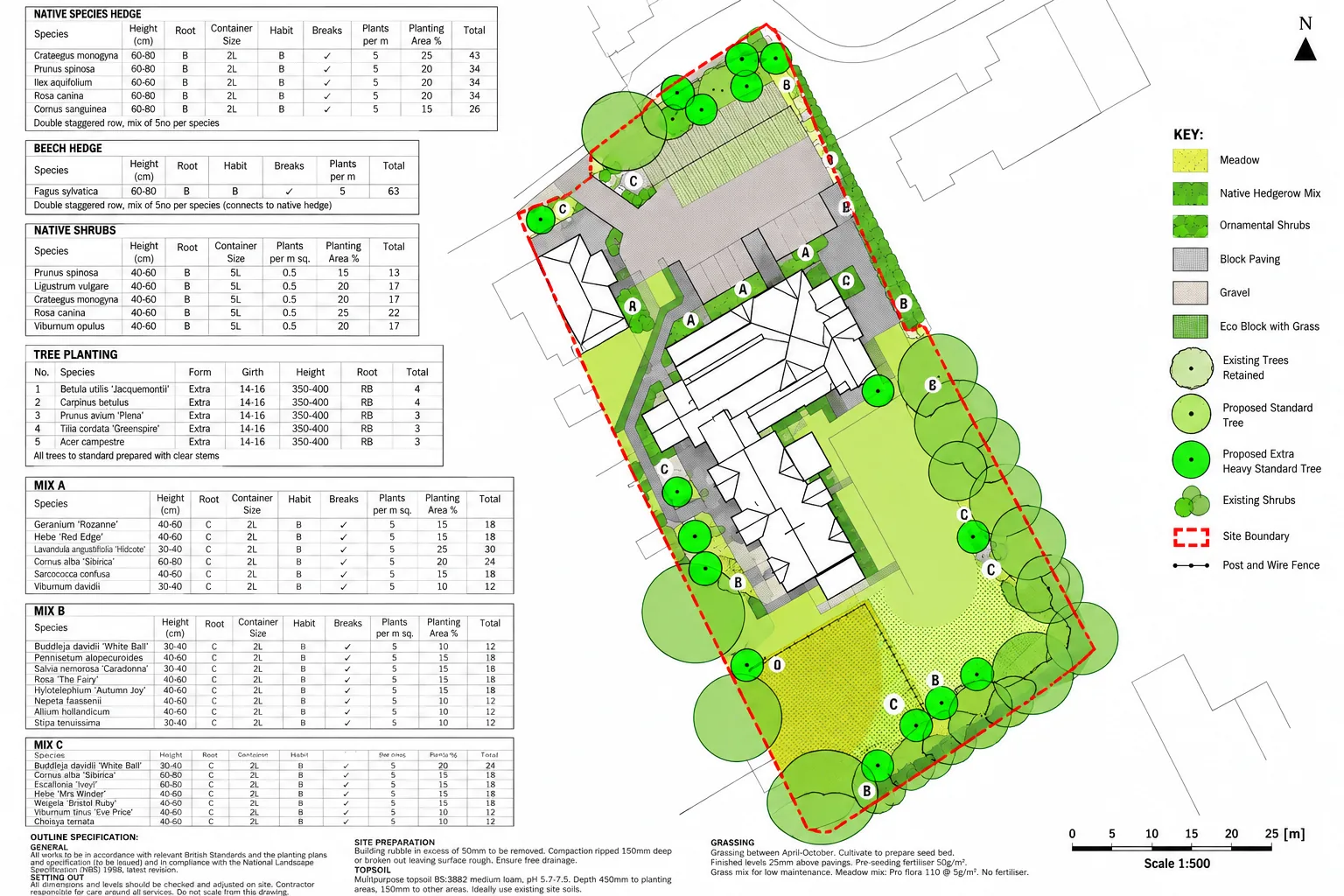
A change we thought was a huge improvement caused an unexpected planning problem
One experience from one of my own developments particularly influenced the way I look at pre-application advice.
We had been through the pre-app process and received advice based on the scheme we were proposing at that stage. Between the pre-app and the full planning application, my professional team and I made a change to the design that we genuinely believed was a huge improvement to the scheme.
From our perspective, we weren't weakening the proposal. Quite the opposite — we thought we'd made it considerably better.
What we hadn't anticipated was that the change would create an issue when the full application was considered, particularly from the conservation officer's perspective. It became a much bigger planning issue than we'd expected.
The pre-application advice related to the proposal we'd actually shown them. Once an element changed, we couldn't simply assume everything previously discussed would apply unchanged.
This is particularly important in a conservation area, with a listed building or where other heritage considerations apply. Something that seems relatively minor from a development or design perspective can have much greater significance from a conservation perspective.
The lesson wasn't that we shouldn't have tried to improve the scheme. It was that we shouldn't have underestimated the planning implications of changing it.
Today, if an important element changes following encouraging pre-app advice, I'd want my professional team to consider whether it should be discussed further with the planning authority before the full application.
Listen to what the planning authority is actually telling you
Developers naturally want to find the positives. If an officer says the principle of development may be acceptable subject to several issues, it's easy to hear only the first part.
The qualifications may be more important. If concerns over design, scale, access, heritage or another matter can be addressed, excellent. If they fundamentally undermine the development, that information needs to go back into the appraisal.
Pre-app advice is most valuable when you're prepared to listen to the parts you didn't want to hear.
Planning and the appraisal should work together
My approach is: Screen first. Agree the opportunity in principle. Investigate properly. Commit last.
If planning advice suggests fewer units, GDV may fall. If highways work or a heritage-led design solution is required, costs may rise. If the programme lengthens, finance costs may rise. Those changes can affect what I can afford to pay for the site.
Planning isn't separate from the financial appraisal. The two continually inform each other.
Protect your position while planning is investigated
Reaching an agreement in principle doesn't mean I would necessarily complete the purchase and only then investigate planning. One reason for carrying out a pre-app at this stage is to gain more information before becoming irrevocably committed to the acquisition.
How that position is protected depends on the transaction and legal advice. It might involve a purchase subject to planning, conditional contract, option agreement or another appropriate structure. Understand when your commitment becomes binding, what money you're putting at risk and what happens if the planning position isn't what you expected.
Should every development have a pre-app?
No. Some straightforward projects may have a sufficiently clear planning position for an experienced architect or planning consultant to recommend proceeding directly to an application. The usefulness, cost and timescale of an authority's service also matter.
But where planning uncertainty could materially change whether I buy a site, I'd seriously consider whether early advice is money well spent. Professional drawings and a pre-app can look expensive until you compare the cost with buying the wrong site.
Know when to bring in the professionals
Property development doesn't require you to know more about planning than a good planning consultant, more about architecture than your architect or more about heritage than a conservation specialist.
Part of development is knowing who you need, when you need them and what questions you should be asking them. The developer still has to bring that information together and make the commercial decision.
Sometimes the answer changes the development
A difficult planning response doesn't automatically mean abandoning the site. Perhaps the scheme needs changing, fewer units produce a better development, or another use deserves consideration. But there is a difference between responding intelligently to information and endlessly changing a scheme because you're determined to make it work.
Eventually the appraisal has to stand on its own merits. Sometimes the correct decision is still: walk away.
If you're considering a site, one-to-one mentoring can help you work through the planning potential, pre-app strategy, appraisal, professional team, costs and risks. I don't replace your architect, planning consultant or other professional advisers; my role is to help look at the development as a whole, challenge assumptions and identify the questions that need answering.
If you are looking at development potential within land you already own, see my guide: Can I build a house in my garden?
Discuss the actual property, numbers and risks.
I work one-to-one with property developers and investors around their actual opportunities and decisions — not generic examples.
Arrange a Free 30-Minute Call